Modern Band
A full music-program partnership built on the modern-band methodology: we help kids make music, the way they learn a language. Grade-banded streams run from pre-instrumental Junior Jammers through ukulele, guitar and a full Modern Band to digital music production in high school.
Music as a second language.
Our Modern Band methodology comes from the Little Kids Rock pedagogy — an internationally recognized approach that teaches music the way we teach language: by speaking it first, and reading it later.
- 01
Music, taught like a language.
We treat music as a second language — learned the way infants learn to speak. Listen, imitate, approximate, become fluent. Notation comes later, after fluency, just like reading comes after speech.
- 02
Modern instruments. Modern repertoire.
Guitar, ukulele, bass, drums, piano and voice — playing music written within the past fifty years. Students see themselves reflected in the curriculum.
- 03
Improvise and compose from day one.
Performance, improvisation and composition aren't held back for advanced students. Every student plays, every student creates, every term.
- 04
Low pressure. High joy.
Errors aren't corrected on the spot. We keep the affective filter low so students stay confident, curious, and engaged — and they progress faster as a result.
Many people say, ‘music is a language,’ but it is seldom taught as one.
We teach music the way you learned your first language.
Our brains process music much like language. You spoke your first language for years before you read or wrote it, and nobody handed you a grammar book first. We teach music in the same order: play first, read later, so kids make real music from the very first class.
Memorise a script
Like an actor learning lines in a language they don't speak: every note is right, but nothing is understood. Students read and repeat, and many stop before they ever play a song they love.
- Reading notation from week one
- Memorisation without understanding
- No way to hold a conversation
Hold a conversation
Learned like a first language, music becomes something students can speak. They listen, copy, play and improvise long before they read, and the reading makes sense when it comes.
- Play in a band
- Play songs from the radio by ear
- Write and produce their own music
Repertoire, technique, reading and ear training still matter. We add what traditional lessons leave out: composition, improvisation, applied theory and music technology.
- 01 · Birth – 18 months
Listening
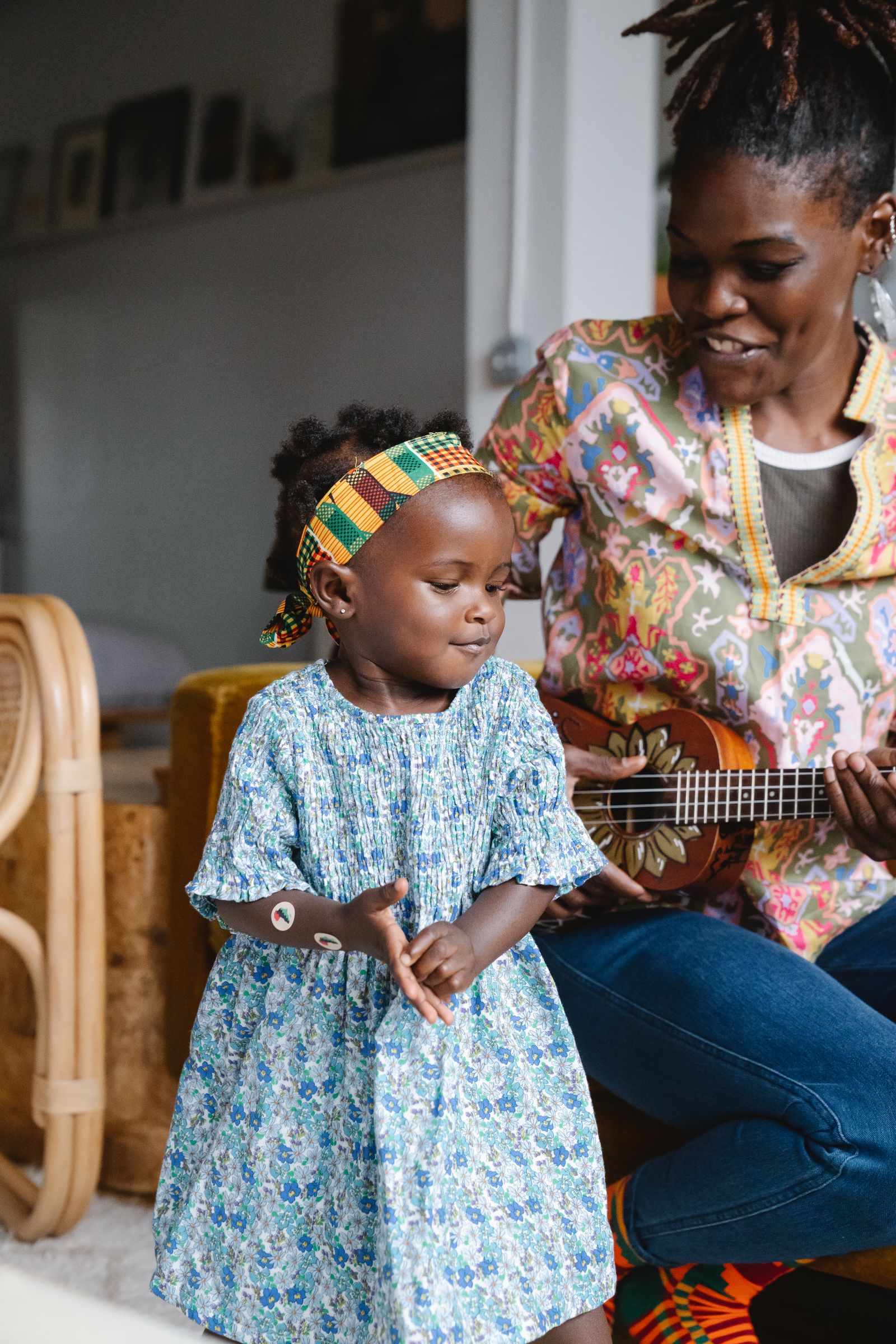
LanguageInfants learn to speak by simply listening to the people around them.
MusicSongs, rhymes and musical games with a caregiver. Children soak up the sounds of music before they make any.
- 02 · 18 months – Kindergarten
Approximation
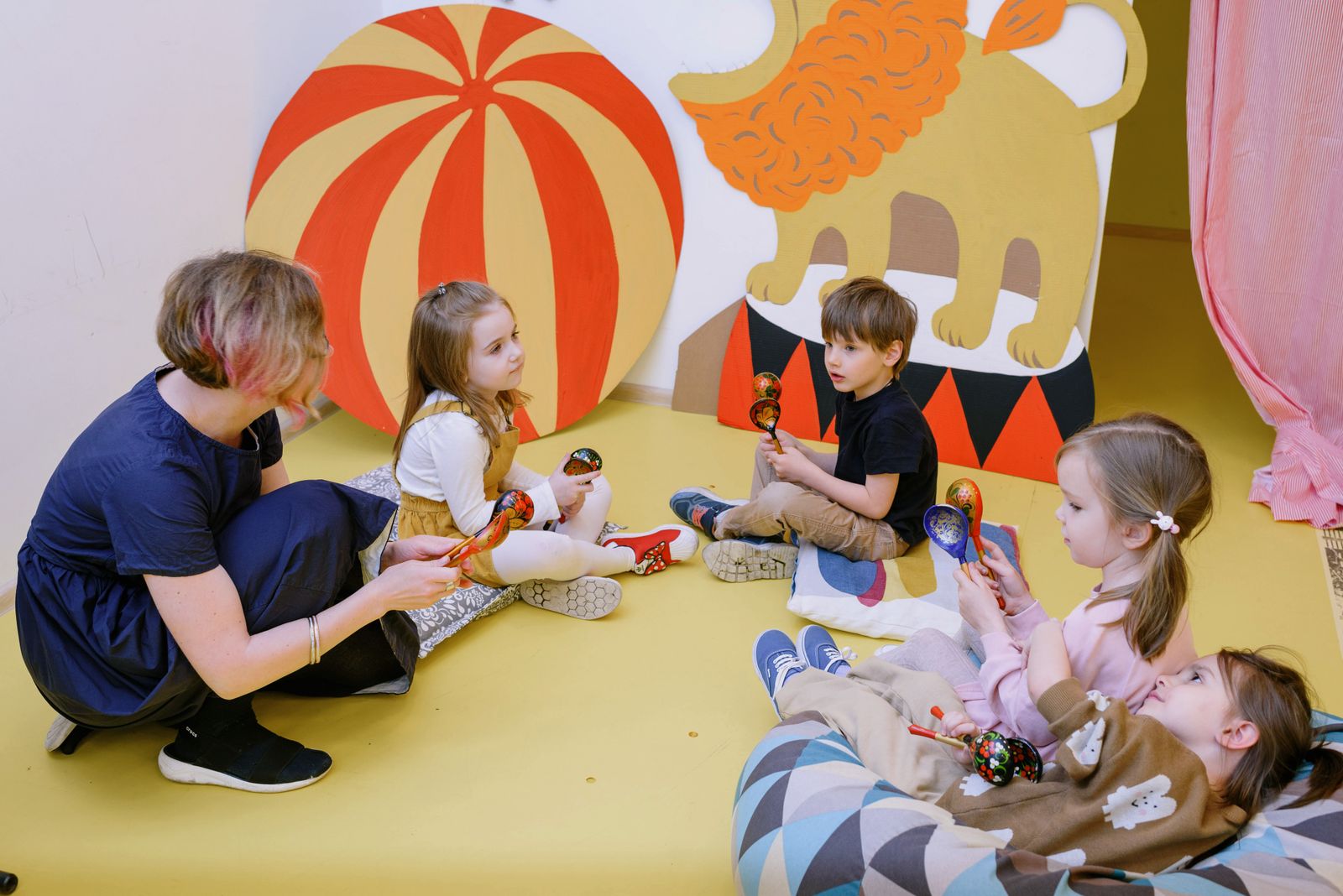
LanguageBabies babble, and adults babble back. Mistakes are part of how speech begins.
MusicChildren copy a beat, sing along and take turns on percussion. We welcome the messy first tries, because that's how music begins too.
- 03 · Grades 1 – 6
Intermediate fluency
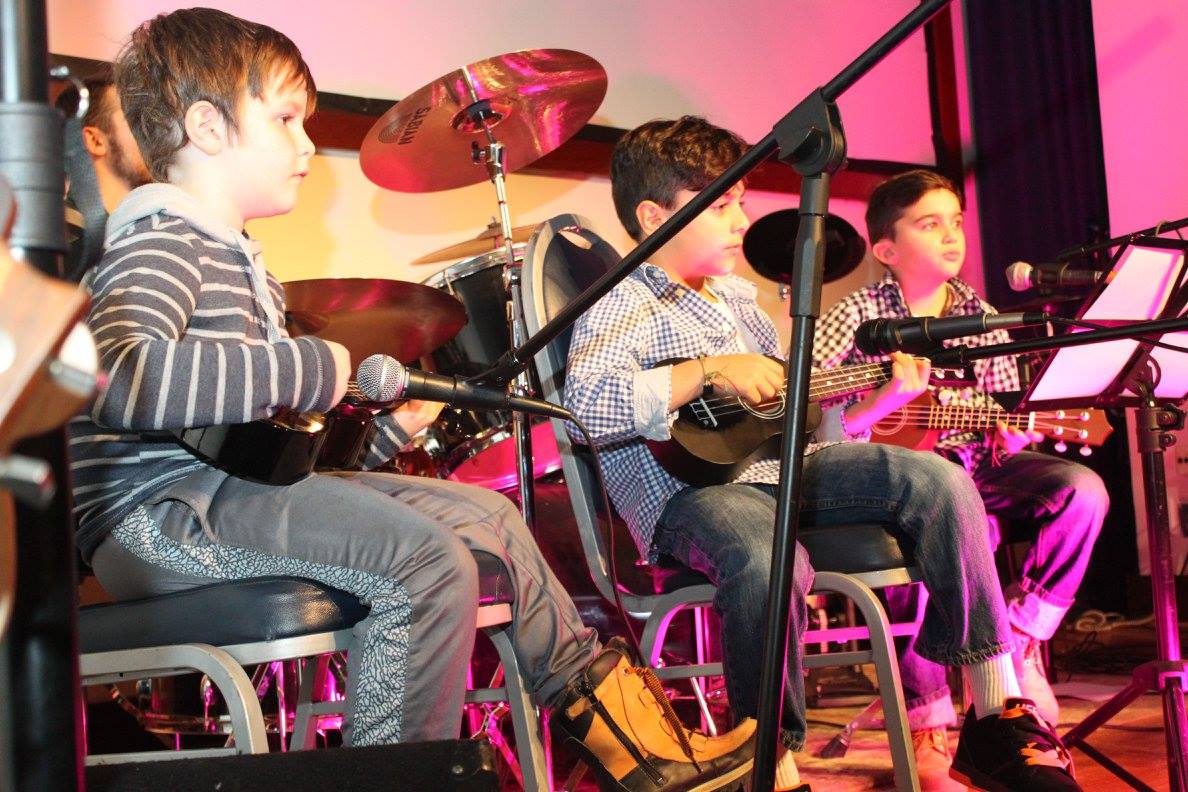
LanguageWords become sentences, and children use language to get things done.
MusicStudents play whole songs from the first week, on ukulele and then guitar: chord "shapes", strumming and riffs, learned by playing, not by reading.
- 04 · Grades 7 – 8
Fluency
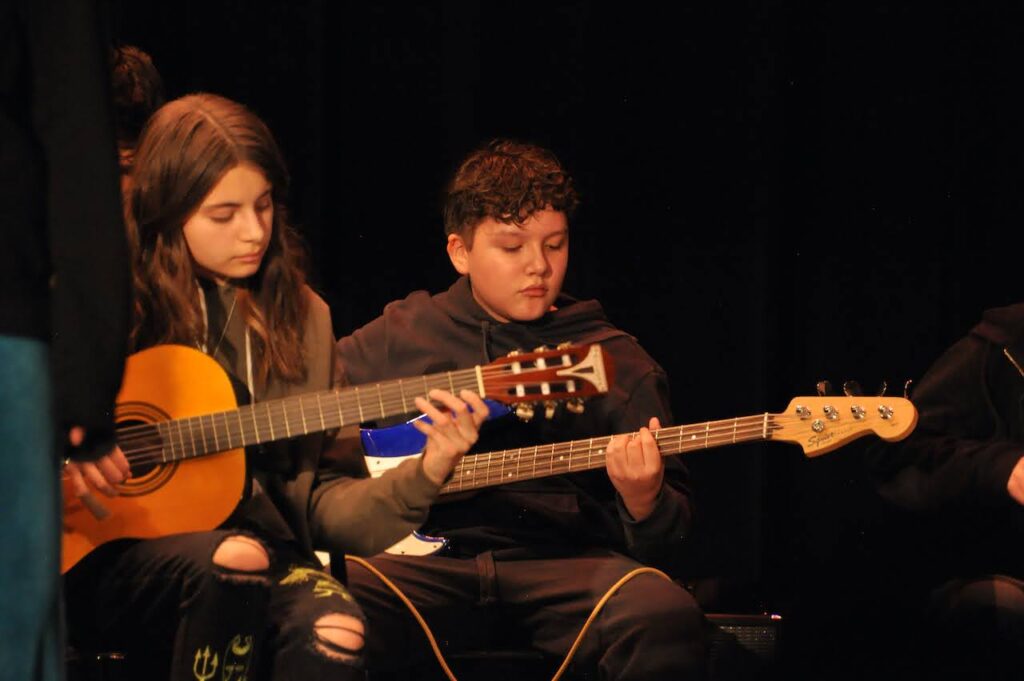
LanguageNative-like proficiency: children express themselves freely.
MusicA full Modern Band on guitar, bass, drums, keys and voice. Students improvise, arrange and write their own songs together.
- 05 · Grades 9 – 12
Reading and writing
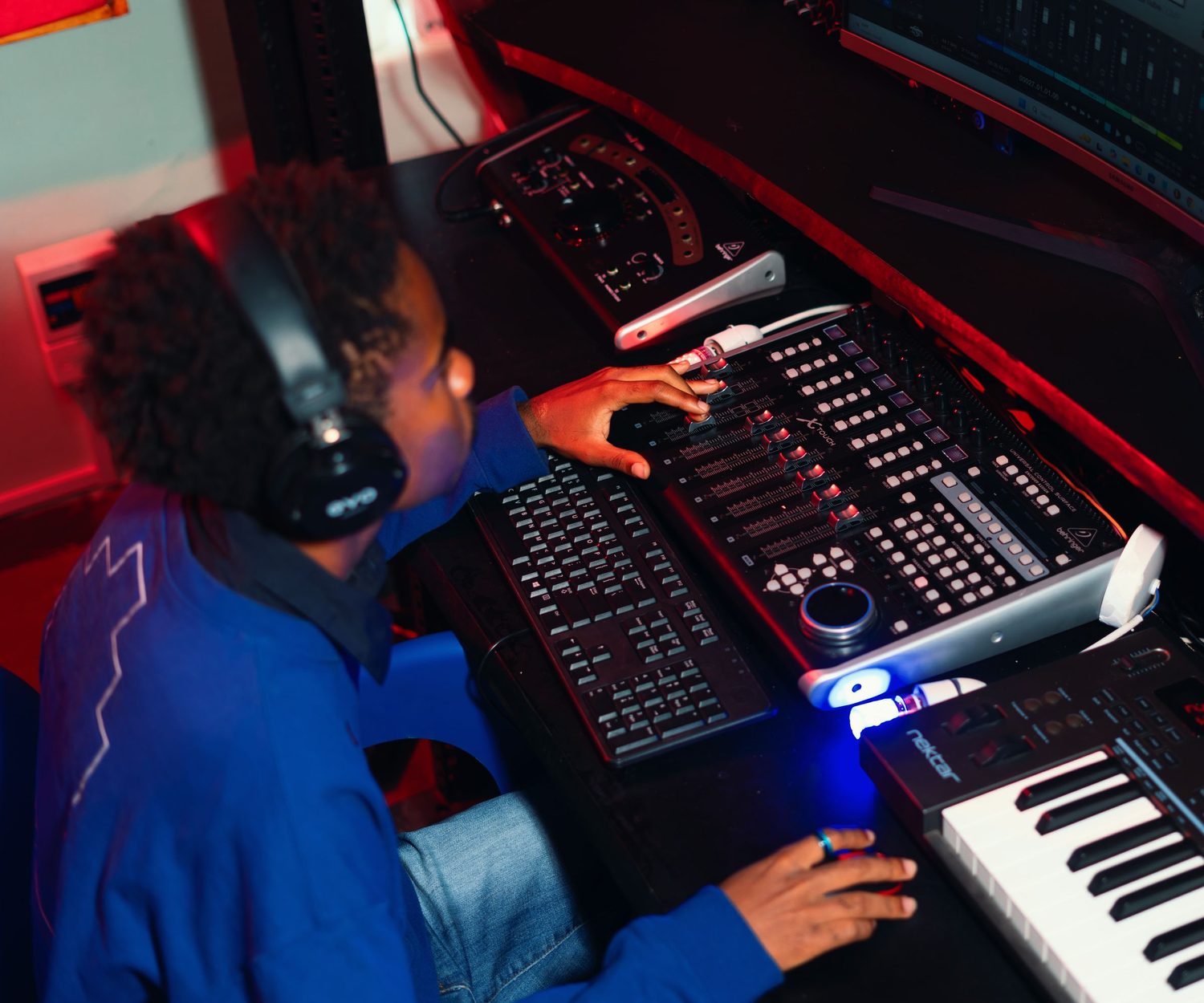
LanguageFluent speakers learn to read, and to put their own thoughts into writing.
MusicStudents become authors. They write, record, produce and release their own music in a digital audio workstation, and read and notate it with real context.
Ideally a child has the opportunity to ‘speak’ or ‘play’ music for a few years before they are introduced to the written system.
The music kids already have in their headphones.
Marching band and jazz ensemble are proud traditions, and Modern Band sits right beside them. The difference is what students play and what they play it on: the instruments and the songs of the past fifty years.
Marching band
- Instruments
- Brass, woodwinds and marching percussion
- Repertoire
- Marches, fanfares and show arrangements
- The first weeks
- Reading parts and learning drill
- Snare
- Bass drum
- Trumpet
- Trombone
- Tuba
- Flute
Jazz ensemble
- Instruments
- Saxophones, trumpets, trombones and a rhythm section
- Repertoire
- Swing and jazz standards, most from the 1920s to the 1960s
- The first weeks
- Reading charts, then learning to improvise
- Sax
- Trumpet
- Trombone
- Upright bass
- Piano
- Drum kit
Modern Band
- Instruments
- Guitar, bass, keys, drums, vocals and music technology
- Repertoire
- Rock, pop, hip hop, R&B, Latin and country from the past fifty years
- The first weeks
- Playing songs they already know, by ear and from chord charts
- Guitar
- Bass
- Keys
- Drums
- Vocals
- Tech
Two chords. A whole song.
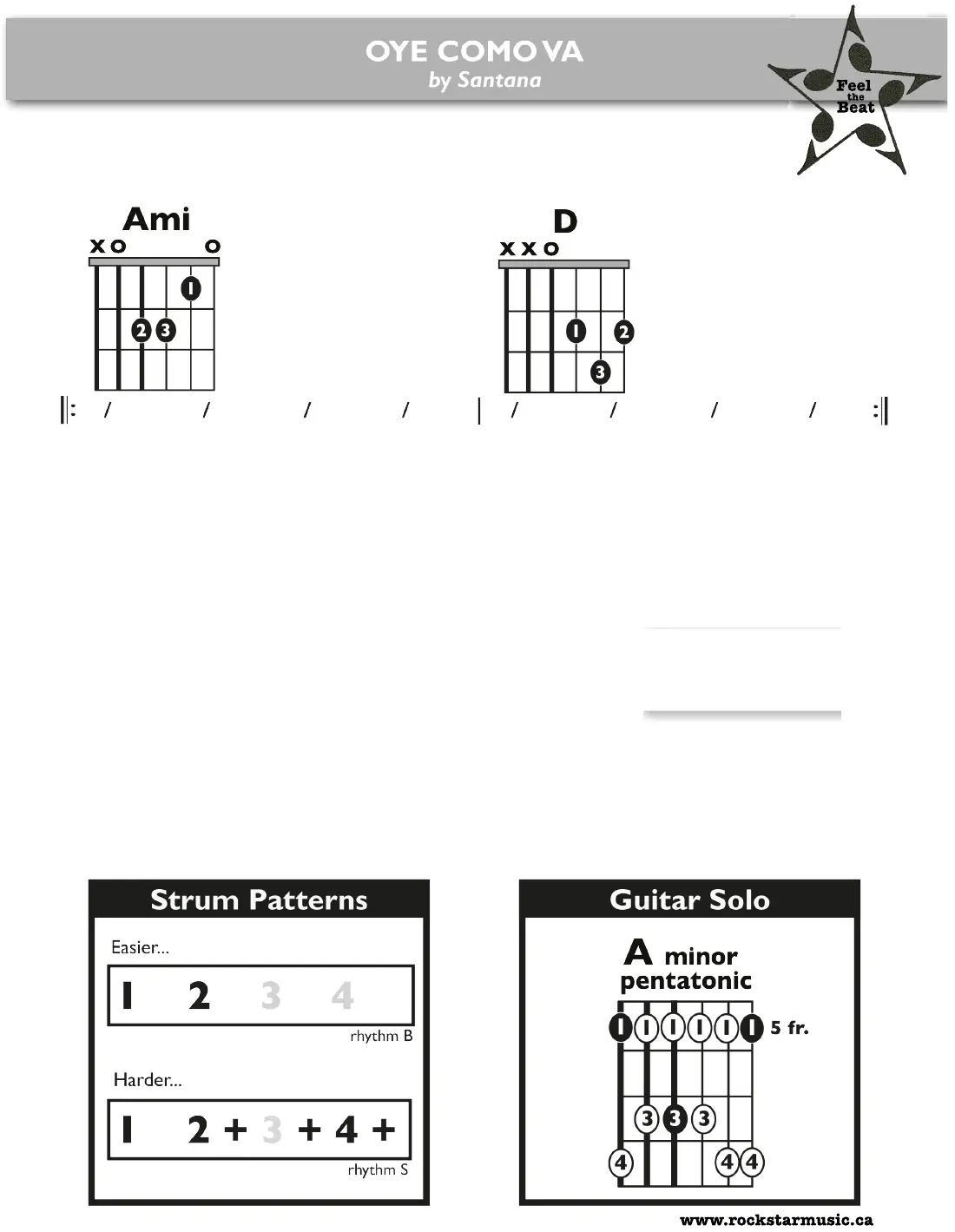
Every Rockstar teacher carries a library of more than 360 Modern Band chord charts in the Rockstar app, part of a songbook of over 700 songs. Charts are graded by how many chords they need, and about 90 of them need only two or three, so a beginner starts on a real hit and plays it with the band the same week.
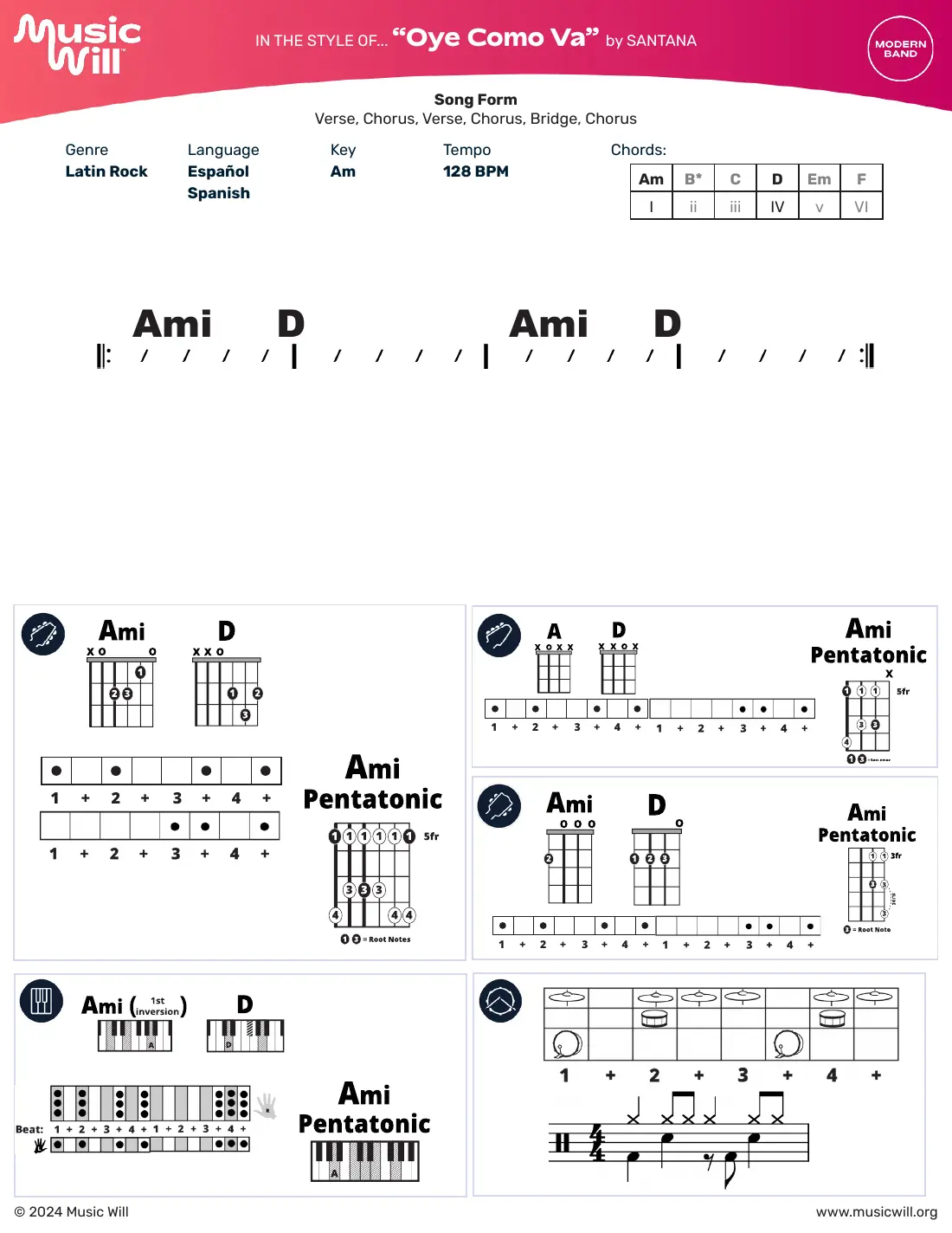
Flip through a few of the real charts our teachers use: pick a song, then the part for each instrument in the band.
Guitar, keys and bass read the same chord chart, drums lock into the groove, and vocals take the melody. Nobody waits until they can read notation to play together.
Oye Como Va · Modern Band
Santana · Easy
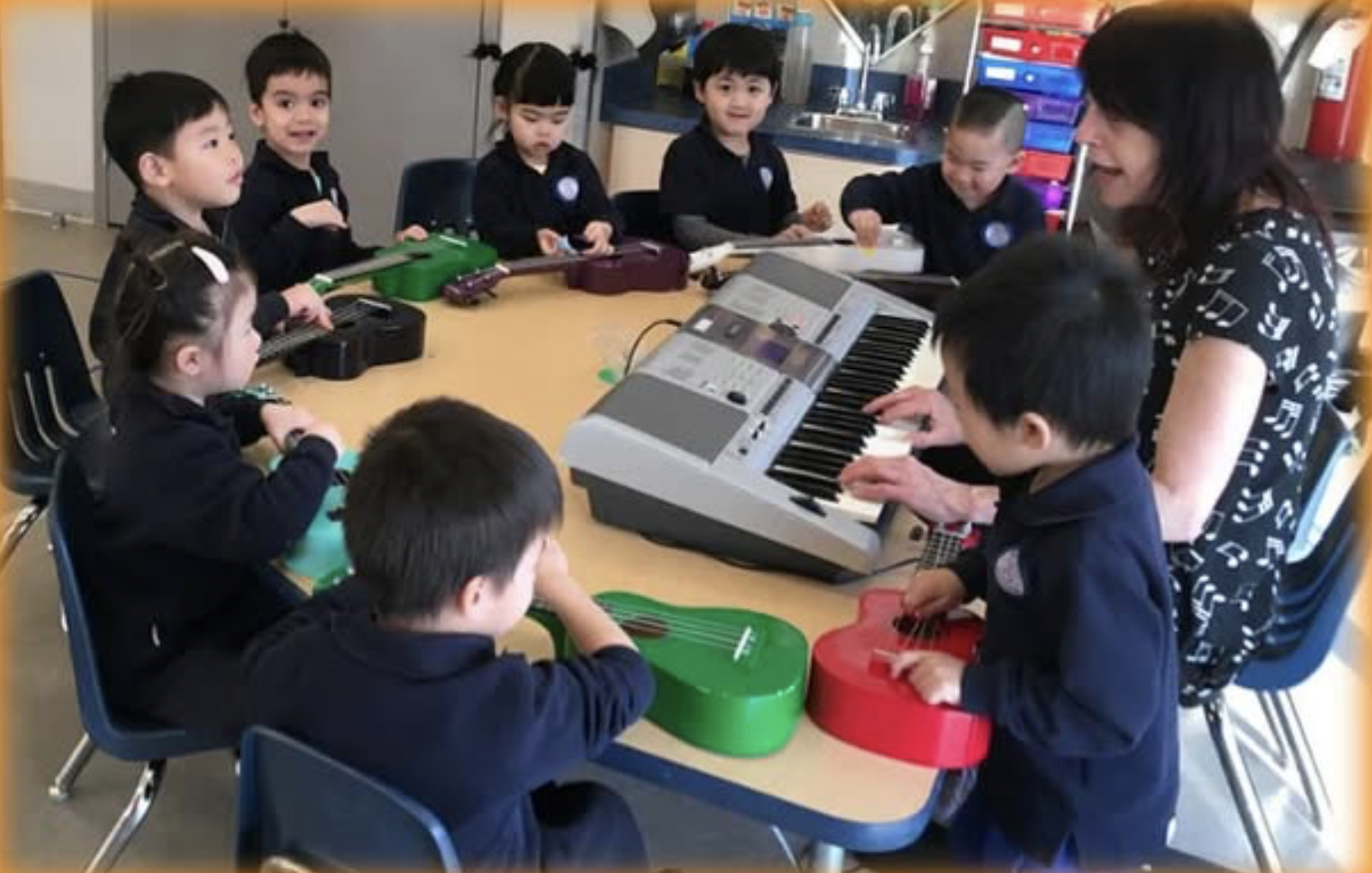
Junior Jammers
Kindergarten · Pre-instrumentalThe first stage of the modern-band journey — singing in tune, keeping a beat, and making music together.
Children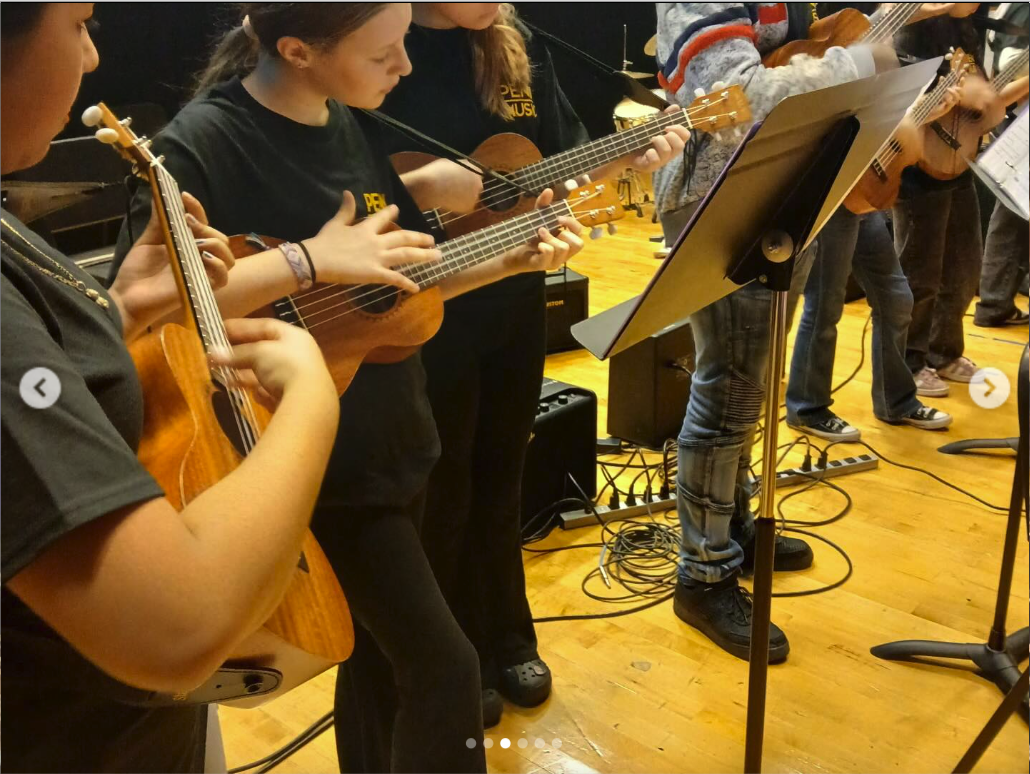
Ukulele Program
Grades 1 – 3 · Ukulele ensembleAn in-class ukulele ensemble where students play modern repertoire together — chords, rhythm, solfège, performance.
Children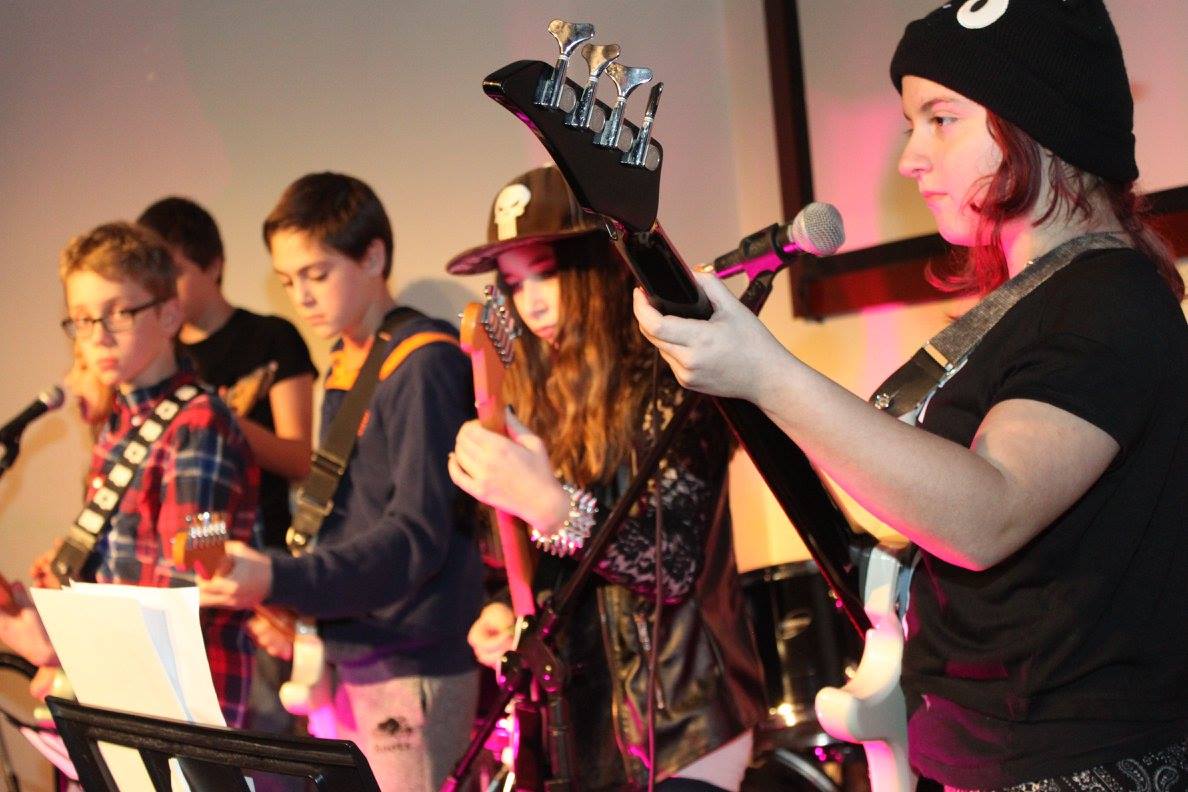
Guitar Program
Grades 4 – 6 · Guitar ensembleThe ukulele grows up: students move to guitar and play the songs they hear every day, together.
Children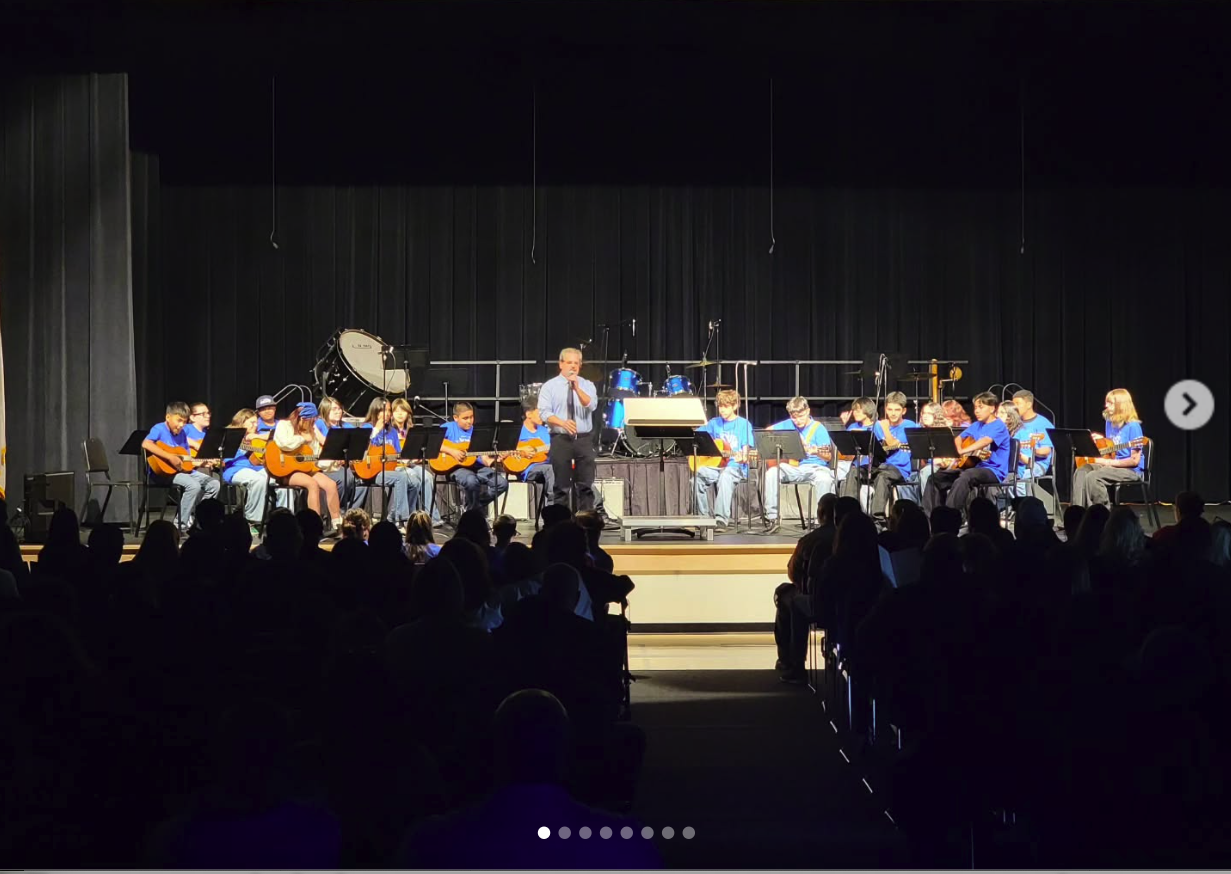
Modern Band Ensemble
Grades 7 – 8 · Full modern bandA fifth stream of music education — alongside orchestra, jazz, marching band and chorus — built on the music students actually listen to.
YouthDigital Music Production
Grades 9 – 12 · Mixed-media courseWhere students become authors: writing, recording and producing their own music on the tools the industry uses.
Youth